A Qualcomm SOM module can suit a connected camera, gateway, or mobile terminal, but MediaTek Genio may fit another workload better. Vantron’s SOM portfolio includes OSM, SMARC, Qseven, and COM Express form factors, so processor selection is only one part of the design decision.
For an industrial IoT product, you also need to compare AI acceleration, camera and display support, software compatibility, thermal behavior, carrier-board effort, and lifecycle planning. The right platform is the one that fits the complete device rather than the one with the most impressive headline.
Qualcomm and MediaTek Genio Address Different Design Priorities
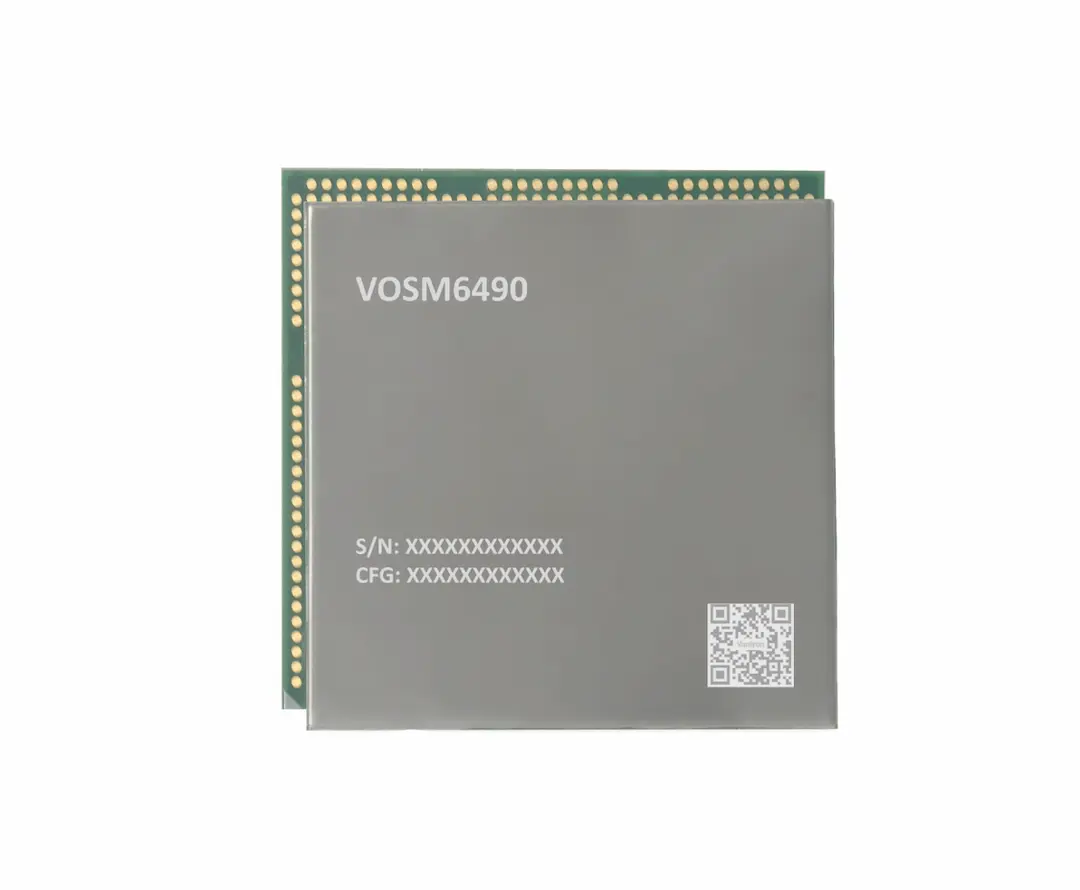
A selected Qualcomm-based SoM should be matched to the device’s multimedia, connectivity, and inference requirements rather than judged by the platform name alone. For example, Vantron’s VOSM6490 page identifies a Qualcomm QCS6490 processor with an Adreno 643 GPU, a Hexagon 770 NPU, a Spectra 570L ISP, and Android 15+ and Linux support. It also lists Wi-Fi and Bluetooth support through the carrier board. These features may suit machine-vision equipment, HMIs, or patient-monitoring devices, subject to carrier-board, software, and thermal validation.
MediaTek Genio is a family of edge AI and IoT application processors designed for products such as smart displays, cameras, kiosks, and embedded devices. Genio platforms also combine general-purpose processing with graphics, multimedia, connectivity, and AI capabilities. The exact balance varies by processor, so the Genio family name alone does not define performance.
A system-on-module places the processor, memory, power circuitry, and other core components on a compact board. Your carrier board then adds connectors, sensors, storage, displays, networking, and application-specific interfaces. This computer-on-module approach reduces the amount of high-speed processor design required in the base product, but it does not remove system integration work.
Which Platform Fits Your Edge AI Workload?
Start with the model and data path. A vision device may capture images, convert formats, resize frames, run inference, apply post-processing, and send an alert. The neural accelerator affects only part of that sequence. Memory bandwidth, camera drivers, image signal processing, and application scheduling can have an equal effect on response time.
For a warehouse pick station, a Qualcomm-based module may be suitable when the device needs local image analysis alongside wireless connectivity, a touchscreen interface, and background application services. An industrial camera can make a pass-or-fail decision locally, while the gateway forwards selected results to a supervisory system.
MediaTek Genio can be a strong candidate for a smart display, self-service kiosk, or retail terminal that combines visual interaction, multimedia playback, and edge inference. A QSR ordering terminal, for example, may need a responsive screen, camera input, audio, and local decision-making without sending every interaction to a remote server.
Do not compare AI platforms only through theoretical accelerator figures. Test the model that you intend to deploy, using the target camera, image resolution, runtime, and operating system. An accelerator is useful only when the model operators, software stack, and data movement fit the selected module.
Carrier-Board Design Reveals the Practical Difference
Processor choice affects the carrier board through available I/O and signal routing. Review camera interfaces, display outputs, Ethernet, USB, PCIe, audio, storage, serial ports, and fieldbus requirements before selecting a module. A carrier board for an outdoor kiosk may prioritize display and camera interfaces, while an AGV controller may need CAN, Ethernet, serial communication, and reliable storage.
Qualcomm and MediaTek Genio modules can both support ARM-based embedded designs, but their pin assignments, power domains, boot methods, and peripheral combinations are not interchangeable. Even modules built around similar processor classes can require different board layouts. Check the module schematic and hardware design guide before committing to connector placement.
Service planning depends on how the module is mounted, rather than simply on whether its compute platform comes from Qualcomm or MediaTek. A socketed module can simplify bench replacement or module-level upgrades, while a compact soldered module may suit a space-constrained product built in high volume.Neither choice removes validation. You still need to check signal integrity, startup behavior, enclosure fit, heat transfer, and recovery after unexpected power loss.
Software, Thermal Design, and Lifecycle Shape Deployment
The software environment often decides whether a processor change is practical. Vantron’s SOM category lists Android, Linux, and Windows support, along with evaluation kits, ready-to-use operating systems, and embedded development support. For your project, confirm the exact BSP, kernel version, camera drivers, AI runtime, hardware codecs, and update process associated with the chosen module.
A Qualcomm-based design may depend on vendor-specific multimedia and AI frameworks. A MediaTek Genio design may use a different SDK, accelerator interface, and board-support package. Porting an application between the two can involve changes to camera capture, model conversion, graphics composition, power management, and device-tree configuration.
Thermal planning also needs workload data. A fanless box installed inside a sealed control cabinet experiences a different thermal environment from a ventilated kiosk. Sustained video processing and continuous inference can raise system temperature even when short benchmark tests look acceptable. A fanless design remains quiet only within its specified thermal envelope.
Lifecycle planning matters for an industrial product expected to operate for years. Vantron has worked in embedded computing for more than 20 years, employs over 200 research personnel from a variety of fields, and provides FAE technical support. For embedded iot solutions, ask for lifecycle information tied to the exact processor, memory configuration, module revision, and software package rather than relying on a platform family name.
Use a Project Scorecard Before Freezing the BOM
Build a comparison table around the deployed product. Record the required camera inputs, display outputs, network interfaces, storage type, operating system, AI model, expected inference rate, enclosure volume, ambient conditions, service method, and planned production life. This gives procurement, hardware, software, and product teams a shared basis for reviewing the two platforms.
A useful evaluation should include a carrier-board prototype and a complete software test. Measure boot time, application response, inference latency, video behavior, power recovery, network stability, and thermal performance inside the intended enclosure. Also test the update and rollback path before the design reaches field trials.
Choose a Qualcomm SOM module when your product depends on a Qualcomm software ecosystem, connected multimedia processing, and an AI-enabled application path that your team can validate. Choose MediaTek Genio when its display, camera, multimedia, and edge AI capabilities align more closely with the device and its software resources. For a supplier review, Vantron provides a portfolio spanning multiple SOM standards and processor platforms, with customization available for OS, I/O, enclosure, or logo requirements.
