
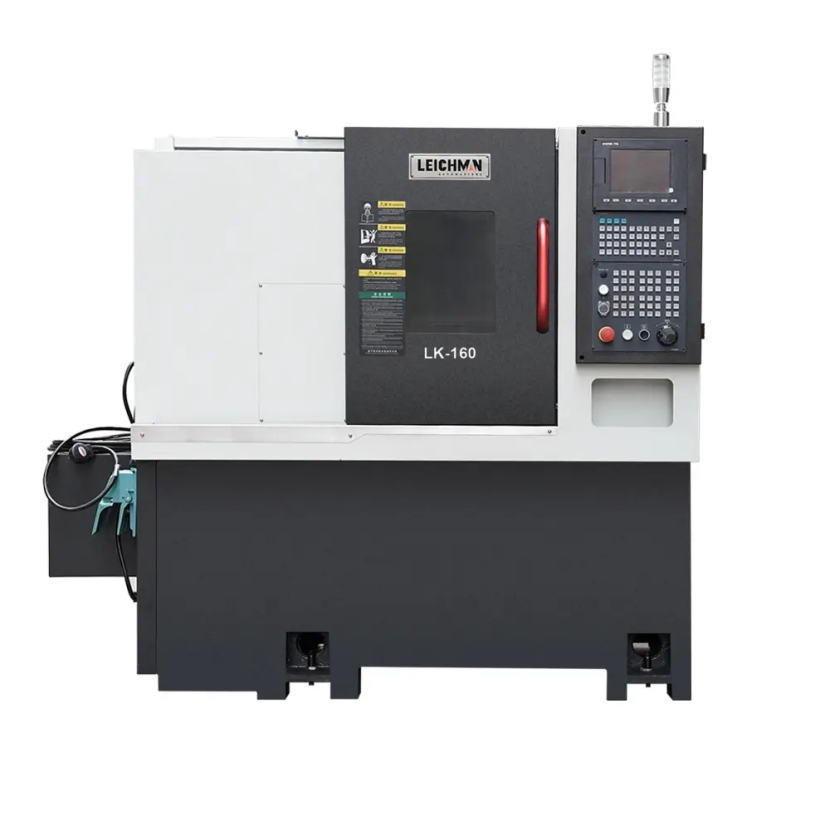
Processing high-hardness alloy materials places strict demands on rigidity and cutting stability. A CNC turret lathe is often evaluated for its ability to maintain consistent performance under heavy cutting loads. In such scenarios, the integration of a reliable CNC lathe tool turret becomes critical for maintaining tool alignment and reducing vibration. The Leichman LK-160, a HOSTON sub-brand model, is designed with a 30° slant bed and reinforced structure to support demanding machining conditions.
Structural Stability of Leichman LK-160 System
Stability is a core requirement when machining tough alloys, and the CNC turret lathe architecture plays a central role in achieving this. The Leichman LK-160 adopts a high-rigidity bed and servo-driven system paired with Fanuc 0i-TF Plus(3), allowing controlled motion during continuous cutting. Within this structure, the CNC lathe tool turret ensures fast indexing and stable positioning for multi-step machining cycles.
Precision Control and Tool Switching Efficiency
In precision machining workflows, the CNC lathe tool turret directly influences cycle efficiency and surface quality. The Leichman system enables rapid tool switching while maintaining positional accuracy, which is essential when working with hardened alloys. Meanwhile, the CNC turret lathe configuration supports multi-tool adaptability, making it suitable for diversified production environments.
Conclusion
Machining high-hardness alloys requires a balanced combination of rigidity, control, and tool management. The Leichman LK-160 demonstrates how a well-structured CNC turret lathe can maintain stability under demanding conditions. With repeated reliance on the CNC lathe tool turret, the system supports consistent cutting performance and operational efficiency.
