
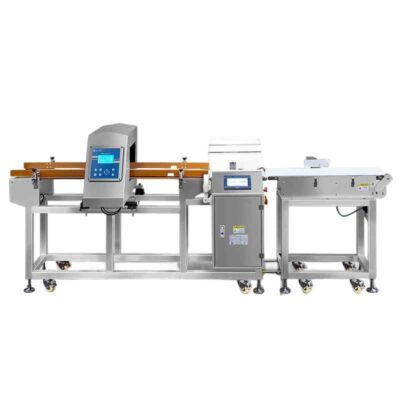
Industrial food processors require absolute clarity regarding foreign object risks on active production lines. Regulatory compliance audits demand an explicit material inventory before packaging lines begin operation.
Plant managers evaluating screening equipment frequently ask what specific metallic elements can be isolated. Resolving this technical inquiry requires examining standard metallurgical classifications and electromagnetic behavior.
Commercial inspection systems target three primary material categories during high-speed manufacturing runs. Raw ingredients and finished packages pass through active tunnels designed to capture metallic disruptions instantly.
Selecting a reliable food metal detector depends entirely on matching aperture sensitivity to these material types. Operational teams configure rejection parameters based on whether contaminants are magnetic or conductive.
Electromagnetic Principles and Material Response
Modern inspection apertures operate through a balanced three-coil transmitter and receiver architecture. Central transmitter coils establish a stable high-frequency electromagnetic field across the entire tunnel span.
Opposing receiver coils continuously monitor baseline voltage to detect microscopic shifts. Passing any conductive or magnetic material alters this magnetic balance, triggering automated rejection routines immediately during operation.
Equipment sensitivity relies directly on a contaminant’s magnetic permeability and electrical conductivity metrics. Every metal category exhibits a distinct electromagnetic signature when crossing the active screening zone.
Engineers utilize these physical properties to calibrate machinery for specific production plant requirements. Understanding these underlying principles explains why certain metallic fragments register more intensely than others.
Ferrous Metals and High-Permeability Contaminants
Ferrous metals represent the easiest material category for industrial screening hardware to isolate. Carbon steel, cast iron, and standard mild steel possess exceptionally high magnetic permeability.
These ferromagnetic traits generate massive electromagnetic disruptions inside the active inspection tunnel. Small iron fragments distort baseline voltages significantly, allowing rapid interception before reaching packaging stages.
Common contamination sources include worn machinery teeth, broken bolts, and structural welding debris. Detecting iron-based particles is critical because their high magnetic signal amplitude maximizes receiver coil response.
Production lines maintain zero tolerance for ferrous debris to protect downstream cutting and mixing blades. Facilities depend on baseline sensitivity profiles specifically optimized for heavy magnetic capture.
Non-Ferrous Metals and High-Conductivity Elements
Non-ferrous metals encompass a broad array of conductive materials lacking strong magnetic properties. Aluminum, copper, brass, bronze, and lead represent the most common non-ferrous elements encountered.
Although non-magnetic, their exceptional electrical conductivity ensures reliable identification by standard receiver coils. Metallic foil seals, copper wiring scraps, and brass fittings fall squarely into this detectable group.
Eddy currents form rapidly on the surfaces of conductive non-ferrous objects crossing the aperture. This electronic reaction forces an immediate voltage imbalance, activating downstream rejection mechanisms like air blasts.
Production operators must ensure their screening units maintain balanced sensitivity across non-ferrous profiles. Advanced solutions engineered by Foodman maintain consistent capture rates across diverse packaging formats.
Stainless Steel Varieties and Low-Amplitude Challenges
Stainless steel introduces unique complexities because most commercial grades are entirely non-magnetic. Furthermore, austenitic grades feature relatively poor electrical conductivity compared to pure copper or aluminum.
This weak physical signature makes microscopic stainless shavings notoriously difficult to capture reliably during high-speed runs. Processing plants handling meat or poultry frequently encounter stainless fragments originating from worn blades.
Specialized multi-frequency software allows inspection units to isolate these challenging low-amplitude signals without generating false alarms. Engineering teams must fine-tune phase settings to account for metallurgical constraints inherent in stainless alloys.
Martensitic grades offer slight magnetic properties, making them marginally easier to detect than austenitic counterparts. Comprehensive screening protocols account for these material differences to maintain absolute product purity.
Beyond Detection: Environmental Variables and Calibration
Aside from the inherent physical differences among metal types, external operational environments introduce environmental variables. High moisture, high salt content, and temperature swings create background conditions that can occasionally mimic true metallic disruptions.
Advanced phase compensation algorithms filter out harmless moisture interference seamlessly during active processing. Plant managers rely on intelligent signal filtering to maintain high sensitivity thresholds across moist items.
Technical calibrations require careful adjustment when transitioning between dry powders and high-moisture consumer goods. Factory technicians utilize modern diagnostic tools to verify that inspection tunnels maintain peak operational accuracy.
Systems developed by Foodman incorporate dynamic frequency shifting to neutralize environmental interference effectively. Quality assurance teams rely on these capabilities to prevent production bottlenecks during seasonal runs.
Achieving comprehensive contamination control demands continuous staff training and proactive equipment maintenance schedules. Operators must understand how to adjust software thresholds when changing product recipes on the line.
Deploying a high-performance food metal detector completes a robust, multi-layered quality assurance framework. Production floors prioritizing precision engineering consistently minimize regulatory liabilities and costly product recalls.
Regulatory bodies enforce rigorous guidelines regarding foreign object control across international food manufacturing sectors. Facilities failing to identify standard metal contaminants face severe legal repercussions and financial penalties.
Routine auditing builds unshakeable confidence in the overall contaminant interception framework of the plant. Advanced testing spheres help quality assurance teams verify machine responsiveness daily before initiating shifts.
Securing long-term consumer trust requires a reliable inspection infrastructure supported by expert manufacturing partners. Modern facilities integrating Foodman Vision technology consistently achieve superior compliance metrics and operational excellence year after year.
Selecting the correct food metal detector safeguards brand reputation while protecting public health across global markets. Total quality assurance ultimately depends on this sophisticated balance of advanced hardware and intelligent software integration.
