
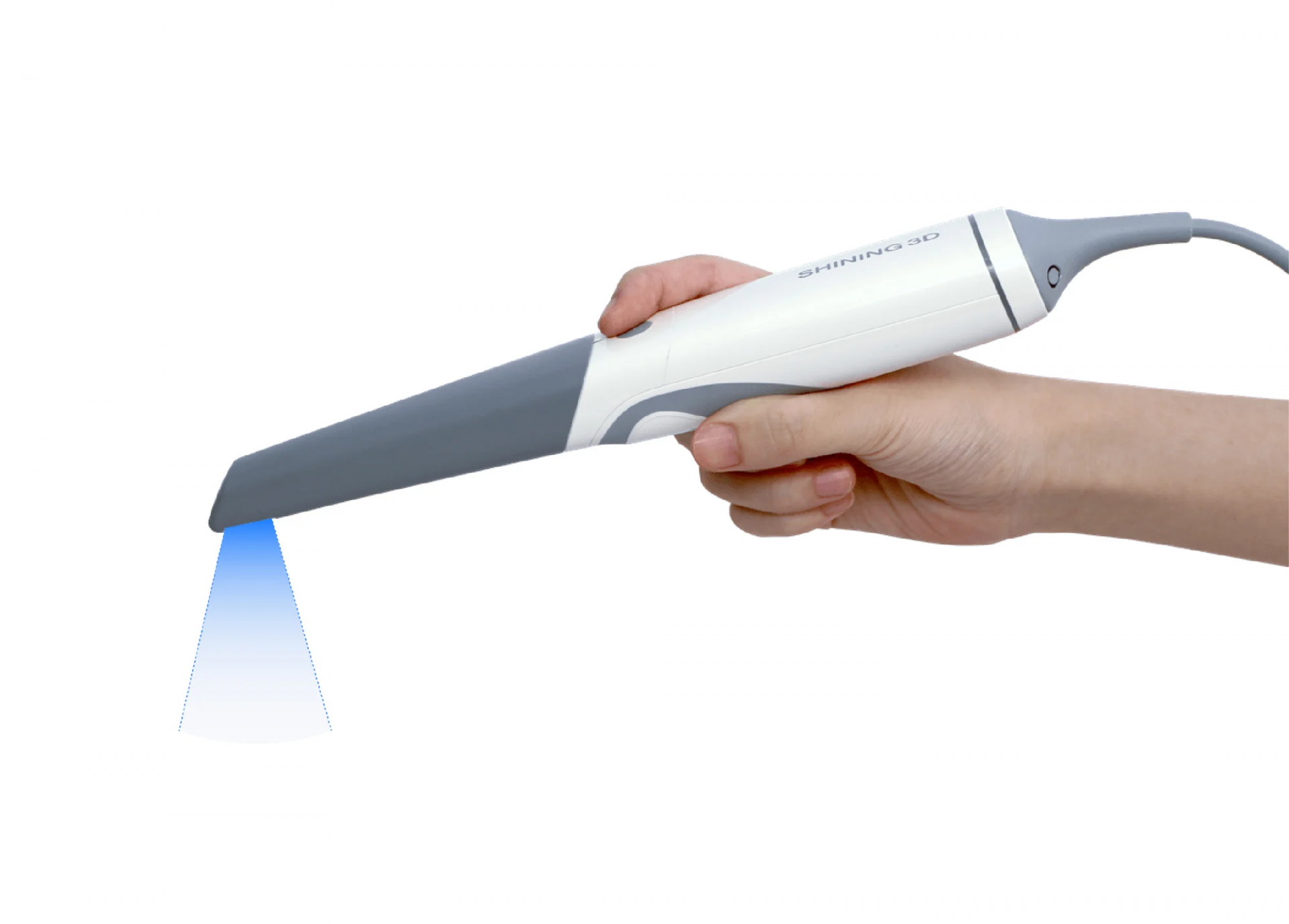
Digital technology has become an essential part of modern dentistry, changing how dental professionals collect patient information and design treatment solutions. Instead of using traditional impression materials, clinics can now use advanced scanning devices to capture detailed digital models of teeth and soft tissues.
A digital dental scanner works by collecting three-dimensional oral data through optical scanning technology and converting it into digital files for diagnosis, treatment planning, and manufacturing workflows. An intraoral scanner brings this technology directly into the patient’s mouth, helping dentists create accurate digital impressions with improved efficiency and comfort. SHINING 3D Dental provides digital dental solutions, including the Aoralscan series, to support restorative, implant, orthodontic, and other clinical applications.
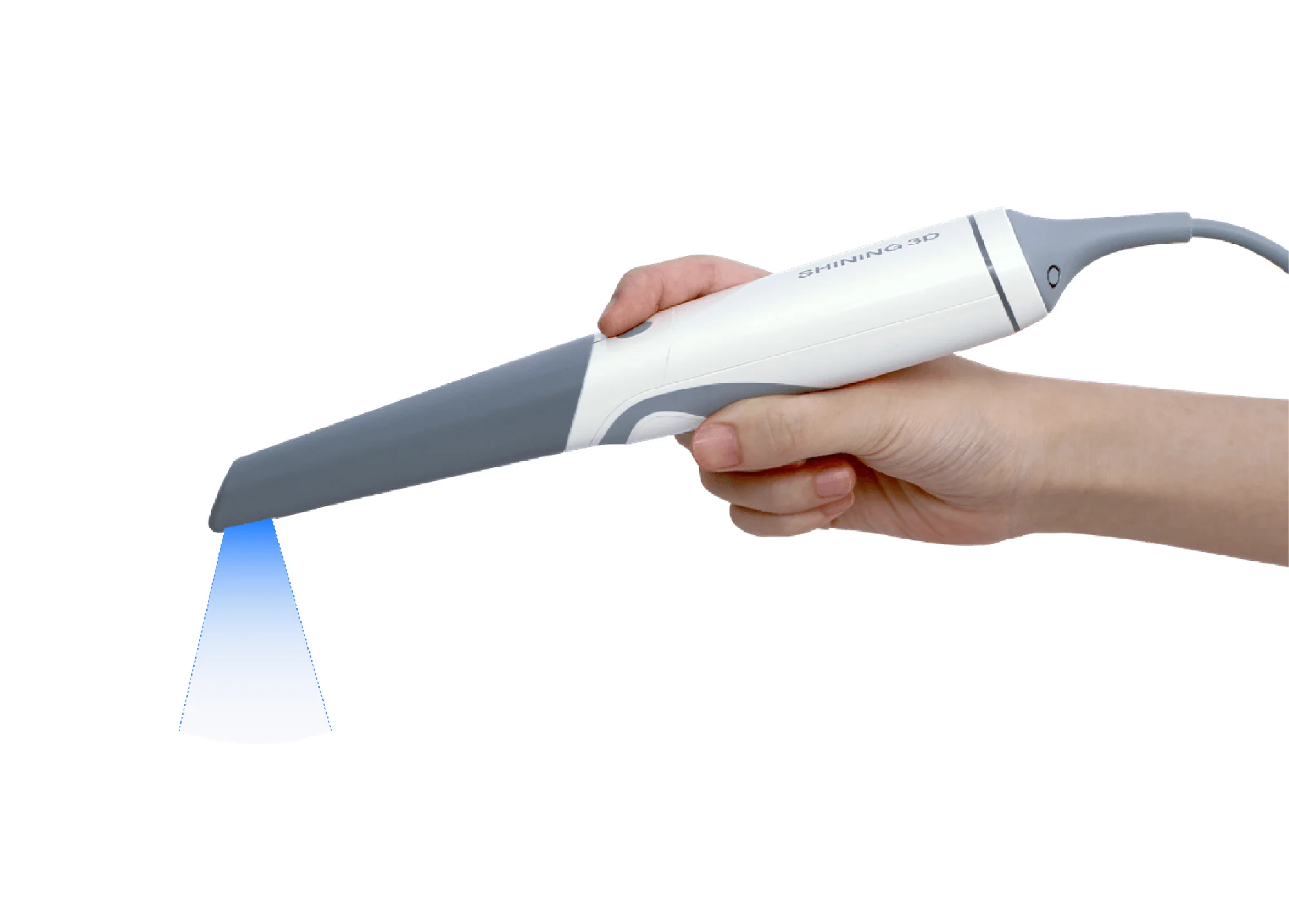
What Is a Digital Dental Scanner and How Does It Work?
- Capturing Oral Structures Through Optical Technology
A digital dental scanner is designed to capture the shape, size, and surface details of teeth and surrounding oral tissues. Unlike traditional impressions that rely on physical materials, digital scanning uses optical methods to collect information without direct contact with dental structures.
During scanning, the device projects light onto the tooth surface and records how the light reflects back. The scanning system processes these signals to generate a three-dimensional representation of the oral area. This digital model allows dentists to view tooth structures from different angles and analyze the collected information through specialized software.
Most modern scanners use structured light technology or similar optical principles to achieve high-speed data acquisition. For example, the SHINING 3D Dental Aoralscan 3 uses non-contact scanning with structured light through a customized projection system.
- Creating a Complete 3D Digital Model
An intraoral scanner does not capture only a single image. Instead, it collects multiple images continuously while the dentist moves the scanner around the patient’s teeth. The software then combines these images into a complete three-dimensional model.
During this process, the system identifies common reference points between different images and aligns them together. This image processing capability helps create a detailed digital impression of the dental arch.
Once the scanning process is completed, the digital model can be reviewed immediately. Dentists can check whether all necessary areas have been captured and rescan specific sections if additional information is required.
The Scanning Process of an Intraoral Scanner
Step 1: Preparing the Patient and Scanner
Before scanning begins, dental professionals prepare the patient and select the appropriate scanner tip based on clinical requirements. The scanner is positioned inside the patient’s mouth, allowing the device to capture teeth, gums, and surrounding structures.
An intraoral scanner is designed with a compact handheld structure so dentists can move it comfortably around different areas of the mouth. Some models also include different tip sizes to support various clinical situations.
The Aoralscan 3 from SHINING 3D Dental offers standard and mini scanner tips. According to official specifications, the standard tip has a scan field of 16 mm × 12 mm × 22 mm, while the mini tip provides a scan field of 12 mm × 9 mm × 22 mm.
Step 2: Collecting and Processing Scan Data
During scanning, the device continuously captures surface information and transfers the data to scanning software. The software processes the images and generates a digital model that represents the patient’s oral condition.
A digital dental scanner needs both hardware and software capabilities to produce usable results. The scanner collects raw data, while the software manages image alignment, model generation, and file preparation.
After processing, the digital impression can be exported into commonly used formats such as STL, OBJ, and PLY. These formats allow compatibility with CAD/CAM systems used for dental design and manufacturing. The Aoralscan 3 supports STL, OBJ, and PLY output options for digital workflow integration.
How Digital Dental Scanners Support Dental Applications?
- Restorative Dentistry
One of the most common uses of a digital dental scanner is restorative treatment. Digital impressions provide detailed information for designing crowns, veneers, bridges, and other restorations.
Instead of sending physical impressions to a laboratory, dentists can transfer digital files electronically. This helps improve communication between dental clinics and laboratories while reducing manual steps in the restoration process.
Digital scanning also allows dental professionals to review preparation areas more efficiently before sending data for manufacturing.
- Orthodontic Treatment
Orthodontic procedures require accurate information about tooth position and bite relationships. An intraoral scanner can create digital models that support orthodontic analysis, aligner design, and treatment monitoring.
Digital models make it easier for clinicians to explain treatment plans to patients. Visual demonstrations can help patients better understand their current dental condition and expected treatment progress.
- Implant Planning
Implant procedures require detailed information about oral structures before treatment begins. Digital scanning technology can support communication between dentists and laboratories by providing accurate digital impressions.
SHINING 3D Dental’s Aoralscan solutions are designed for multiple applications, including implants, orthodontics, restorations, dentures, veneers, and other digital dentistry workflows.
Advantages of Using an Intraoral Scanner in Digital Dentistry
- Improving Workflow Efficiency
Traditional impression methods often involve multiple manual steps, including material preparation, impression setting, physical transportation, and model creation. An intraoral scanner simplifies this process by capturing and transferring digital information directly.
Dentists can immediately review scan results and communicate with laboratories faster. This streamlined workflow can help reduce delays and improve treatment coordination.
- Enhancing Patient Comfort
Patient experience is another important reason why digital scanning technology is becoming more popular. Traditional impressions may cause discomfort due to impression materials or the need to keep trays in the mouth during setting.
A digital scanning process is generally more convenient because it uses a handheld device to collect information directly. This can make dental visits more comfortable and improve patient acceptance of digital treatment methods.
SHINING 3D Dental Solutions for Digital Scanning Workflows
SHINING 3D Dental develops digital solutions that help dental professionals adopt modern scanning workflows. Its intraoral scanner product range is designed to support different clinical needs, from everyday restorative procedures to complex digital treatment planning.
The Aoralscan 3 is one example of SHINING 3D Dental’s scanning technology. The scanner weighs approximately 240 g without cables and uses USB 3.0 connectivity. Its lightweight design and digital output capabilities help integrate scanning into daily clinical operations.
By combining optical scanning technology, intelligent software, and digital workflow compatibility, SHINING 3D Dental solutions help clinics improve efficiency and provide more predictable treatment experiences.
Conclusion
A digital dental scanner works by capturing detailed oral data through optical scanning, processing multiple images, and creating accurate three-dimensional digital models. An intraoral scanner brings this technology directly into clinical environments, replacing many traditional impression procedures with a faster and more flexible digital approach.
As digital dentistry continues to develop, scanning technology will remain an important tool for improving diagnosis, treatment planning, and communication. With solutions such as SHINING 3D DENTAL‘s Aoralscan series, dental professionals can build more efficient workflows while delivering a better patient experience.
