
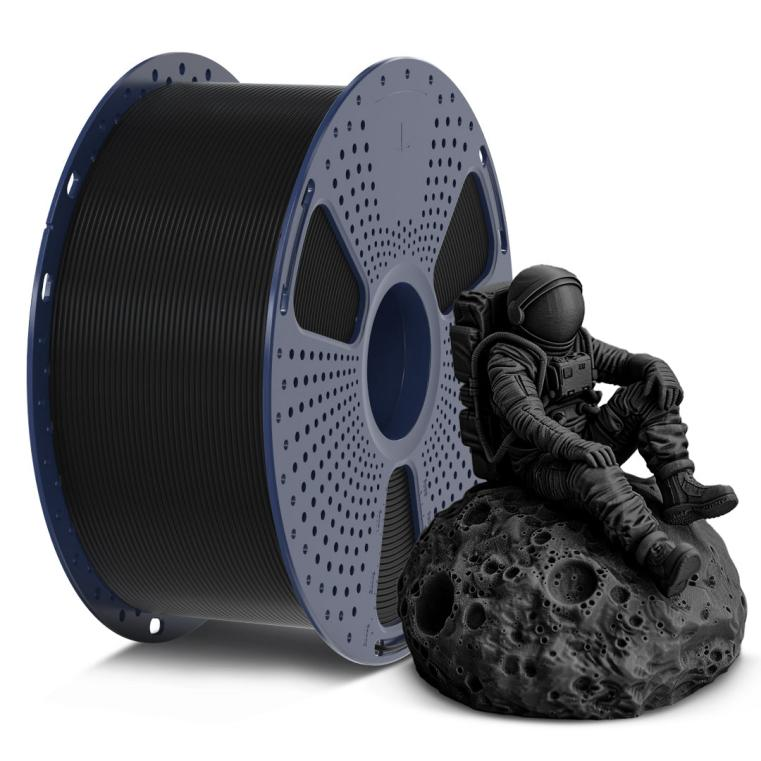
Understanding 3D printer filament types requires analyzing printing temperature, material durability, and bed adhesion requirements. The most common thermoplastic materials include Polylactic Acid, PETG, ABS, and TPU, each serving distinct functional or decorative applications. Selecting the correct thermoplastic dictates the overall structural success and visual finish of any 3D printing project.
Introduction to 3D Printing Materials
A standard 3D printer operates by melting and extruding thermoplastic polymers layer by layer. Operators must match hardware capabilities with the correct spool of plastic to achieve favorable results. Material selection influences layer bonding strength and the final surface texture of the printed object. Leading manufacturers develop distinct formulas to address different engineering or artistic needs.
For instance, the global brand SUNLU offers a comprehensive catalog of professional 3D printing materials. Beginners often start by learning about the thermal properties of standard plastics before moving to complex composites. Different thermoplastics dictate specific nozzle temperatures, cooling fan speeds, and heated bed configurations. Mastering these basic properties remains essential for producing high-quality three-dimensional objects.
PLA Filaments and Their Daily Applications
Polylactic acid (PLA) is a widely used entry-level thermoplastic because it is relatively easy to print and can be produced from renewable feedstocks such as corn-derived sugars. Its biodegradation depends on the material formulation and environmental conditions, so plant-based origins should not be taken as proof that a printed object will readily break down in ordinary outdoor or home-composting environments. PLA printing requirements vary by product and printer, but many standard formulations work well with moderate nozzle temperatures and a heated or appropriately prepared build plate.
Beginners appreciate the smooth surface finish and consistent dimensional accuracy that standard PLA filament provides. The material exhibits low shrinkage rates, which helps prevent corners from lifting off the build plate. While not suited for high-heat environments, it excels in creating detailed architectural models and visual prototypes. Many designers rely on this thermoplastic for testing geometries before utilizing more expensive industrial materials.
Advanced Material Categories: PETG, ABS, and TPU
When projects demand higher mechanical strength or heat resistance, operators typically turn to PETG or ABS materials. PETG combines the structural integrity associated with industrial plastics with the printability of everyday materials. It possesses strong chemical resistance and layer adhesion, making it suitable for mechanical parts.
ABS is used for durable functional parts and some automotive applications, but conventional ABS can warp as it cools, so an enclosed printer may help improve temperature stability. Requirements vary by formulation: some modified materials, such as SUNLU Easy ABS, are designed for use without an enclosure. TPU is a flexible thermoplastic used for items such as gaskets, protective covers, and wearable accessories, although the appropriate printing speed and hardware depend on the TPU’s hardness and the printer setup.
Comparing Technical Specifications
To assist beginners in configuring their hardware, official SUNLU technical specifications provide specific temperature guidelines. Adhering to these parameters prevents common extrusion failures and poor layer bonding. The following table outlines the recommended baseline settings for major material categories.
| Material Type | Official Nozzle Temp | Official Bed Temp | Recommended Speed | Key Characteristics |
| SUNLU PLA | 200–230°C | 50–60°C | 50–100 mm/s | Easy to print, low shrinkage, low warping |
| SUNLU PETG | 240–260°C | 60–70°C | 50–100 mm/s (up to 300 mm/s) | High toughness, impact-resistant, chemical-resistant |
| SUNLU Easy ABS (E-ABS) | 225–255°C | 60–70°C | 50–100 mm/s | Low warping, virtually odorless, no enclosure needed |
| SUNLU TPU (90A / 95A) | 190–240°C | 30–60°C | 20–40 mm/s (up to 120 mm/s for 95A) | Highly flexible, wear-resistant, high elasticity |
Reviewing these SUNLU product parameters helps operators calibrate initial slicing software settings. Fine-tuning might still be necessary depending on the specific environmental conditions of the workspace.
Aesthetic and Functional Variations
Beyond standard formulations, specialty filaments offer different visual finishes and functional characteristics. Silk-style filaments are designed to produce a glossy, reflective surface, while matte formulations can reduce reflections and make layer lines less noticeable. Wood-filled filaments combine a polymer with wood-based filler to create a wood-like appearance, although the composition varies by product. High-speed filaments are formulated for faster extrusion, but the achievable speed still depends on the filament, hotend, printer, and slicer settings. Choosing an appropriate finish can reduce the need for some post-processing, though sanding or painting may still be necessary.
Proper Storage and Handling Procedures
Moisture can affect the print quality of many 3D printing filaments, although sensitivity varies by material and formulation. When moisture-sensitive filament is heated, absorbed water can form bubbles or cause popping sounds, stringing, rough surfaces, and weaker layer bonding. Check the manufacturer’s drying and storage recommendations for the specific filament rather than assuming that every material requires the same humidity level or drying procedure.
Moisture-related printing problems can include rough surfaces, stringing, popping sounds, and reduced part strength. A sealed storage box with desiccant can help control moisture exposure, but the recommended humidity level depends on the material and product. If a spool needs drying, follow the manufacturer’s specified temperature and duration, and confirm that the filament and spool can tolerate the selected conditions.
Slicing Software and Final Adjustments
Software preparation plays an equally critical role in transforming raw materials into successful physical objects. Slicing programs allow operators to define retraction distances, cooling fan curves, and specific travel speeds. Tuning retraction settings prevents unwanted plastic oozing when the print head moves between different sections.
For instance, configuring the exact multiplier for filament PLA helps the extruder push the precise volume of plastic required. Running standardized calibration prints, such as temperature towers, helps identify the optimal thermal threshold for a new spool. Incremental adjustments in slicing software directly translate to superior dimensional accuracy and cleaner overhangs.
Conclusion and Continuous Learning
Mastering 3D printing requires patience, continuous experimentation, and a thorough understanding of material science fundamentals. Beginners should focus on perfecting techniques with standard materials before exploring complex engineering composites. Keeping detailed logs of temperature settings and hardware adjustments accelerates the learning curve significantly.
Regularly cleaning the printer nozzle and leveling the build plate prevents frustrating material adhesion failures. As the additive manufacturing industry evolves, new polymer blends continuously emerge to simplify the fabrication process. Ultimately, informed material selection transforms basic desktop machines into powerful manufacturing tools capable of producing durable designs.
