
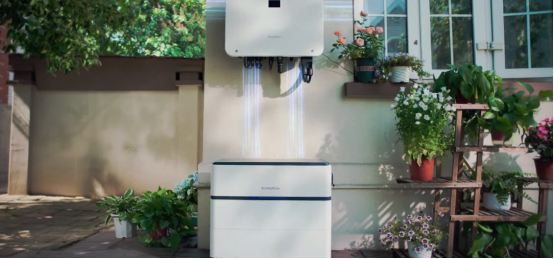
Reliable thermal management is one of the most important factors affecting the performance and lifespan of energy storage systems. As demand for higher-capacity storage grows, technologies used in a 252 kWh battery must effectively control heat generation while maintaining operational efficiency. For products such as PowerKeeper systems and other commercial energy storage solutions, the choice between air cooling and liquid cooling can significantly influence long-term performance.
Air Cooling: Simplicity And Lower Initial Cost
Air cooling has traditionally been used in energy storage applications due to its simple design and relatively low installation cost. Fans and ventilation channels remove excess heat from battery modules, helping maintain safe operating temperatures.
However, as the energy density of a 252 kWh battery increases, air cooling may struggle to provide uniform temperature distribution. Uneven cooling can accelerate battery degradation and reduce overall system efficiency. For larger PowerKeeper-type installations, thermal inconsistencies may also affect charging and discharging performance.
Liquid Cooling: Improved Temperature Control
Liquid cooling systems use coolant circulation to transfer heat away from battery cells more efficiently. This approach provides more precise temperature management and supports stable operation under varying load conditions.
For a 252 kWh battery, liquid cooling helps maintain consistent cell temperatures, reducing thermal stress and extending battery lifespan. Compared with conventional air cooling, advanced liquid-cooled PowerKeeper solutions can achieve higher energy efficiency while minimizing performance losses caused by overheating.
Performance Benefits Beyond Thermal Regulation
Modern liquid-cooling technology contributes not only to thermal stability but also to overall system optimization. Improved temperature control supports higher charging efficiency, better cycle life, and enhanced operational reliability.
These advantages are particularly valuable for PowerKeeper applications where continuous performance is required. In large-capacity deployments, a liquid-cooled 252 kWh battery can deliver more predictable energy output and lower maintenance requirements throughout its lifecycle.
Supporting Reliable Energy Storage Growth
As energy storage projects continue to expand, thermal management remains a critical design consideration. While air cooling offers simplicity, liquid cooling provides greater temperature uniformity and operational efficiency for high-capacity systems.
Sungrow addresses these requirements through solutions such as the PowerStack 255CS, a 125kW/257kWh liquid-cooled energy storage system. By combining advanced thermal management with seamless power delivery and high system reliability, Sungrow helps support the evolving demands of modern energy storage applications.
