
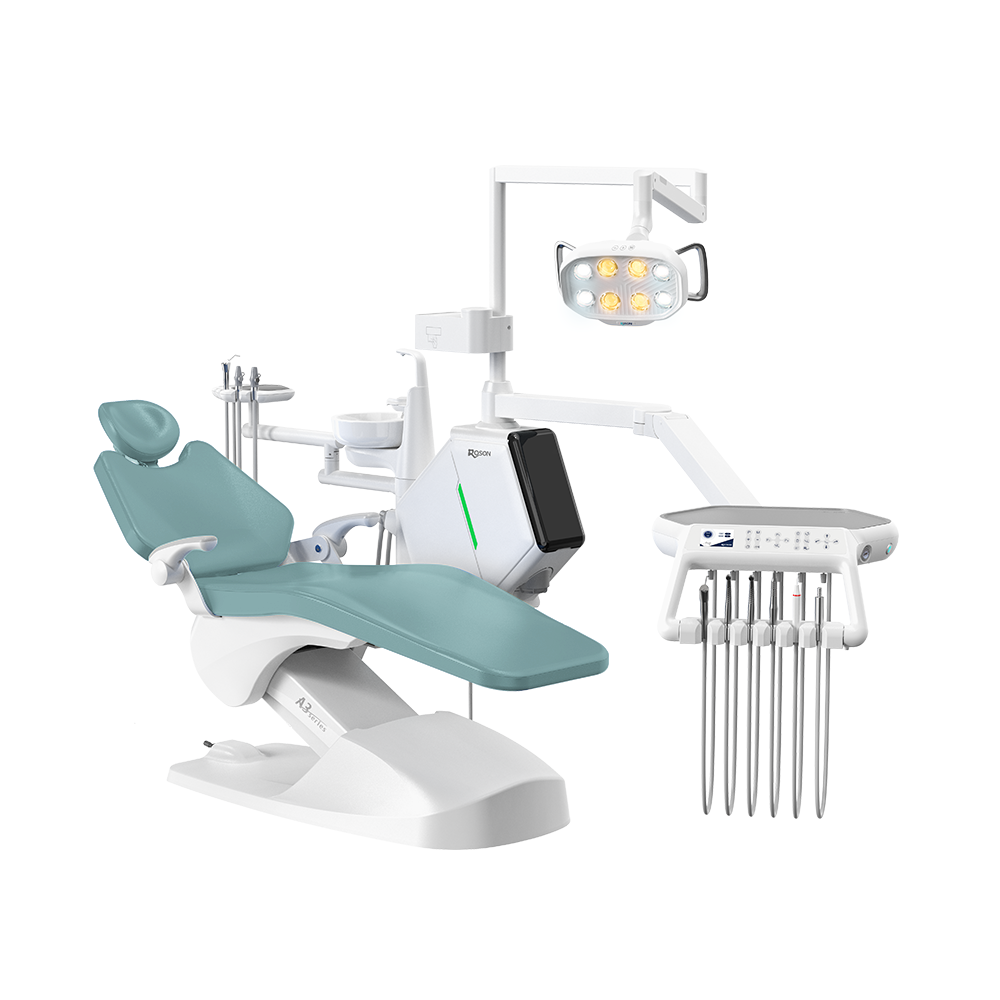
Procuring operatory equipment requires balancing structural quality, financial investment, and daily clinical performance. Facility managers evaluating modern treatment platforms must assess mechanical durability, long-term maintenance costs, and operational reliability to ensure maximum return on investment across expanding healthcare facility networks.
A direct market comparison highlights how different manufacturers address clinical demands. Evaluating a complete dental chair and unit setup across quality, price, and performance metrics helps procurement teams select hardware that satisfies both tight budget constraints and strict operational requirements.
Material Standards and Build Quality Comparisons
Build quality forms the foundation of operational longevity in high-volume practices. Top-tier systems utilize heavy-duty cast aluminum frames, corrosion-resistant internal piping, and medical-grade upholstery, whereas budget alternatives often rely on lightweight plastics that degrade rapidly under daily clinical usage.
Fluidics engineering directly affects hygiene and long-term mechanical reliability. Advanced dental units feature solid brass manifolds, stainless steel filtration, and automated sanitation channels that prevent internal biofilm accumulation, protecting sensitive handpiece turbines from mineral buildup and premature component failure.
Structural integrity during patient positioning reflects overall manufacturing precision. Workstations engineered by Roson incorporate reinforced base plates and robust articulation joints that prevent mechanical play, ensuring steady support and consistent positioning precision during complex, multi-hour surgical and restorative treatments.
Evaluating structural upholstery durability is equally critical for long-term practice value. High-density memory foam cushion layers wrapped in seamless micro-fiber leather resist harsh chemical disinfectants, maintaining aesthetic appeal and ergonomic support despite continuous daily cleaning protocols across busy operatory schedules.
Analyzing Price Metrics and Total Cost of Ownership
Initial acquisition costs rarely reflect the true long-term financial commitment. While lower-priced equipment may seem attractive upfront, frequent component failures, expensive replacement parts, and extended operatory downtime quickly erode initial cost savings over a multi-year operational equipment lifecycle.
Mid-range and premium workstation investments deliver superior overall value through extended service lives. Investing in a robust dental chair and unit reduces emergency service calls, lowers replacement part frequency, and stabilizes operational overhead, yielding predictable long-term financial returns for expanding dental practices.
Energy efficiency and utility consumption also impact ongoing operational expenses. Modern systems utilize low-voltage DC motors, intelligent LED lighting, and demand-responsive vacuum valves that reduce power and water consumption, lowering utility bills across multi-chair clinical installations over long operational periods.
Procurement teams must also evaluate warranty coverage and component availability. Manufacturers like Roson provide transparent technical support, accessible replacement parts, and comprehensive warranties, safeguarding facility capital while minimizing lost revenue caused by unexpected equipment breakdowns in busy clinical settings.
Performance Efficiency and Procedural Ergonomics
Daily procedural performance depends on intuitive delivery head design and responsive controls. Premium delivery systems provide smooth articulation, touch-screen interfaces, and customizable pre-set memory options, enabling operating doctors to transition seamlessly between treatment phases without interrupting clinical focus or slowing workflow.
Patient comfort directly influences treatment efficiency and overall clinical satisfaction. Synchronized seat movement, smooth elevation mechanisms, and adjustable headrest angles minimize patient anxiety, allowing clinicians to work efficiently on fully relaxed patients during lengthy operative and preventative care appointments.
Deploying high-performance dental units optimizes two-handed and four-handed clinical workflows. Multi-functional assistant trays, powerful suction lines, and flexible instrument arms enable clinical assistants to manage aspiration and instrument preparation smoothly without crowding the primary operator’s active workspace.
The flagship Roson Flagship Model A3 exemplifies high-performance operatory engineering in modern practice. Featuring synchronized motion dynamics, anti-collision safety sensors, and intuitive digital controls, this system balances premium operational features with outstanding build quality to maximize daily clinical productivity.
Infection Control and Hygiene Management Standards
Efficient decontamination features accelerate room turnover between consecutive patient appointments. Systems featuring detachable ceramic spittoons, autoclavable instrument handles, and smooth housing surfaces reduce cleaning time, allowing support staff to maintain strict infection control standards without delaying busy appointment schedules.
Automated waterline flushing loops protect patient safety and internal fluid lines. Selecting a modern dental chair and unit with integrated sanitization systems ensures clean water delivery, mitigating cross-contamination risks while preserving internal check valves from chemical residue and aggressive mineral deposits.
Non-contact sensor controls further enhance operatory safety by minimizing physical contact. Sensor-activated operating lights and automatic cup-filling systems reduce cross-contamination vectors, reassuring patients of the facility’s commitment to safety while streamlining routine hygiene routines for clinical assistant personnel.
Strategic Procurement Decisions
Evaluating quality, price, and performance reveals that balanced mid-to-high-tier systems offer the highest ROI. Facilities that prioritize structural durability, intuitive controls, and robust warranty backing avoid the hidden expenses associated with frequent repairs and premature equipment replacement cycles.
Integrating well-engineered dental units across all treatment operatories simplifies staff training and routine maintenance. Uniform equipment configurations enable clinicians and technical staff to operate and maintain systems efficiently, ensuring consistent treatment standards across every operatory in the healthcare facility.
Smart equipment choices come down to balancing structural durability with daily operational performance. Partnering with established brands like Roson provides dental facilities with the build quality, financial predictability, and clinical efficiency required for sustained, long-term success.
